What is the pipe dripping outside my boiler?
Most combi and system boilers have two pipes that leave the boiler and run to the outside of the building. People often call either of them the "overflow pipe", but they do very different jobs, and a drip from one means something quite different from a drip from the other.
The first is the pressure relief discharge pipe. It is connected to the pressure relief valve (PRV), a spring-loaded safety valve on the heating side of the boiler. If the pressure in the sealed heating circuit gets too high, the valve opens and sends water down this pipe to a safe place outside. On most domestic boilers the valve is set to open at 3 bar. In normal running it should never open, so the end of the pipe should be dry.
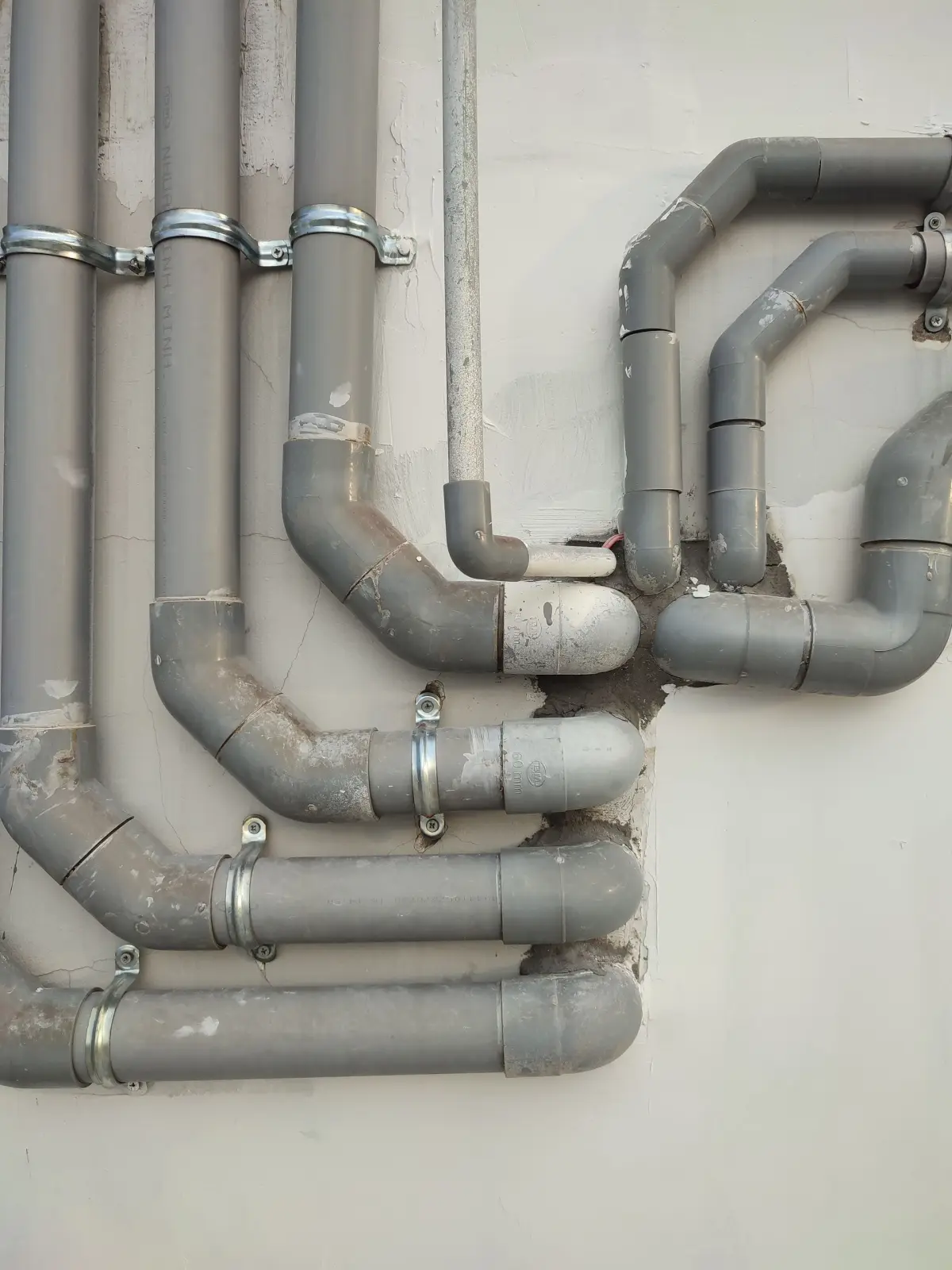
The second is the condensate pipe. Modern condensing boilers produce slightly acidic water as they recover heat from the flue gases, and this drains away through a plastic pipe to a drain or soakaway. Water coming out of the condensate pipe while the boiler is firing is normal.
Is it the pressure relief valve or the condensate pipe?
Before anything else, work out which pipe is dripping. These differences usually settle it.
| Feature | Pressure relief discharge pipe | Condensate pipe |
|---|---|---|
| Usual material | Copper, typically 15mm | White or grey plastic, wider than the copper pipe |
| Where it ends | Turned down towards the ground or into a gully, sometimes near a wall | Into a drain, gully, soil stack or soakaway |
| When water comes out | Should be never | Whenever the boiler is firing, especially in cold weather |
| What a drip means | The heating system is overpressurising or the valve is not sealing | Normally nothing, unless it is leaking at a joint indoors |
If you have a system boiler with an unvented hot water cylinder, there will also be a discharge pipe from the cylinder safety valves, usually running via a tundish near the cylinder. That is a separate safety arrangement on the hot water side and needs a qualified unvented installer to look at it. This article deals with the boiler's own heating PRV.
Why is my pressure relief valve dripping?
A PRV drips for one of two broad reasons. Either the system pressure really is reaching the valve's opening point, or the valve is no longer sealing properly at normal pressure. The common causes are:
- The system was overfilled. If the pressure was topped up to 2 bar or more when cold, normal expansion as the water heats can take it to the valve setting. This often happens when someone repressurises a system that was losing water and overshoots.
- The expansion vessel has lost its charge. The vessel absorbs the extra volume as water warms. When its air charge leaks away or its diaphragm fails, pressure climbs sharply on every heat-up and the PRV opens to release it.
- The filling loop is letting by. The filling loop connects the heating circuit to the mains cold supply. If one of its valves does not close fully, mains water creeps in, the pressure rises over hours or days, and the PRV discharges the excess.
- The valve seat is fouled or worn. Once a PRV has opened, a flake of magnetite or scale can stop it closing tightly. Worn seals do the same. The valve then weeps at normal pressure.
The first three are system problems and the valve is only doing its job. The fourth is a valve fault. Often both are present: a vessel fails, the valve opens repeatedly, and after a few weeks the valve itself no longer seals.
How can I check what is causing the drip safely?
You can gather useful evidence without opening the boiler or touching any valves apart from the controls you already use.
- Read the gauge cold. Before the heating comes on in the morning, note the pressure. Most systems should sit around 1 to 1.5 bar cold. Your boiler manual gives the figure for your model.
- Read it again when fully hot. Run the heating for half an hour and check again. A rise of a few tenths of a bar is normal. A climb towards 3 bar points to overfilling or an expansion vessel problem.
- Check the filling loop. Make sure both handles or the key-operated valve are fully closed. On many boilers the filling loop is a braided hose under the boiler. The water fittings regulations expect an external hose like this to be disconnected after use, which also stops it letting water in. Other boilers have a built-in filling key instead.
- Watch the pressure over a day with the heating off. If it rises with the boiler cold and nothing else happening, mains water is getting in through the filling loop.
- Put a container under the outlet. If you can safely reach the end of the discharge pipe, collect what comes out over a day. The amount and timing tell the engineer a lot.
Do not try to force the PRV open or shut to "test" it, and do not cap or block the discharge pipe. It is a safety device and it must be free to discharge.
Is a dripping pressure relief valve dangerous?
The valve is the thing keeping the system safe, so a drip usually means it is working rather than failing dangerously. The risks are indirect. Hot water can discharge from the pipe, which is why the outlet should be positioned where nobody can be scalded. The system keeps losing water and you keep topping up, which dilutes inhibitor and brings in fresh oxygen that feeds corrosion. And if the underlying cause is a failed expansion vessel, the boiler is being run through big pressure swings that put stress on seals and joints throughout the circuit.
If the pipe is discharging steadily, if water is coming out hot and fast, or if the gauge is sitting at or near 3 bar, switch the boiler off and call a Gas Safe registered engineer.
Can I fix a dripping boiler overflow pipe myself?
If the cause is simply that you overfilled the system, you can bring the pressure back down by bleeding a little water from a radiator with the system cold, until the gauge reads the recommended figure. That is within the reach of most homeowners.
Anything beyond that means working on the boiler's sealed system. Replacing a PRV, recharging or replacing an expansion vessel, or repairing a filling loop that lets by involves opening the boiler casing and working on the pressurised circuit, and it should be done by a Gas Safe registered engineer. It may also affect your boiler warranty if done by anyone else.
Does a dripping PRV mean there is a leak somewhere else too?
This is where a lot of people get caught out. A dripping relief valve and a hidden leak can exist at the same time, and one can mask the other.
A typical story runs like this. The system has a slow hidden leak, perhaps a pinhole in a pipe under the kitchen floor. The pressure keeps falling, so it gets topped up, sometimes too far. The overfilled system then pushes the PRV open on a hot day, a speck of debris lodges in the seat, and now the valve drips as well. An engineer replaces the valve and the discharge pipe dries up, but the pressure still falls, because the original leak is still there.
It can also work the other way. The valve is replaced, the pressure holds for a while, and everyone assumes the job is done. If the gauge starts drifting down again in the following weeks with the discharge pipe dry, the next step is to look for water escaping inside the property. Our guide on what to do when your boiler keeps losing pressure walks through that search in order.
What does a repair usually involve?
The engineer will normally confirm the cold and hot pressures, check the expansion vessel charge with the system drained down to zero on the heating side, recharge or replace the vessel if needed, and fit a new PRV if the old one has been discharging. They will also check the filling loop and, ideally, test the inhibitor level. Once the system is refilled and bled, the pressure should rise only slightly when hot and return to the same cold figure.
After a repair like this, keep reading the gauge for two or three weeks. A stable cold figure means the problem was confined to the boiler. A slow drop with a dry discharge pipe means there is more going on in the pipework.
When should you call a leak detection specialist?
A dripping relief pipe on its own is a boiler engineer's job. Bring in a leak detection specialist when the boiler side has been fixed and the pressure still drops, when you have a damp patch, stained ceiling or warm area on the floor alongside the pressure loss, or when your insurer needs the source of an escape of water found and written up.
We locate hidden heating leaks with thermal imaging, acoustic listening and, where needed, tracer gas. A thermal imaging survey is £150 to £250, and a combined survey using all three methods is £250 to £500, with the written report included. See our central heating leak detection page for how the survey works, or call 020 3912 0200. Every survey is no find, no fee.
Frequently asked questions
Why is my boiler overflow pipe dripping?
If it is the copper pressure relief pipe, the heating system is either reaching the valve's opening pressure, usually because of overfilling, a failed expansion vessel or a filling loop letting by, or the valve itself is no longer sealing. If it is the plastic condensate pipe, dripping while the boiler runs is normal.
Is it normal for a boiler pressure relief valve to drip?
No. In normal running the valve stays closed and the discharge pipe stays dry. Any regular drip needs investigating.
Can a dripping pressure relief valve cause low boiler pressure?
Yes. Every drop that leaves the pipe is water lost from the sealed system, so the pressure falls over time and the boiler may lock out.
How long can I leave a dripping pressure relief valve?
Not long. A slow drip should be booked in with a Gas Safe engineer promptly. A steady flow, or a gauge at or near 3 bar, means switch off and get help straight away.
My PRV was replaced but the pressure still drops. What now?
With the discharge pipe dry, the water is leaving somewhere else. Check radiators and visible joints, then consider a survey to find a leak under floors or in walls.