24/7 Leak Detection

Leak Detection Case Studies

Jobs from our engineers' reports, written up as they happened: the symptom, the tests, the finding and what it meant for the repair. Addresses are reduced to the area, and the photos are our own from the day.

Call 020 3912 0200
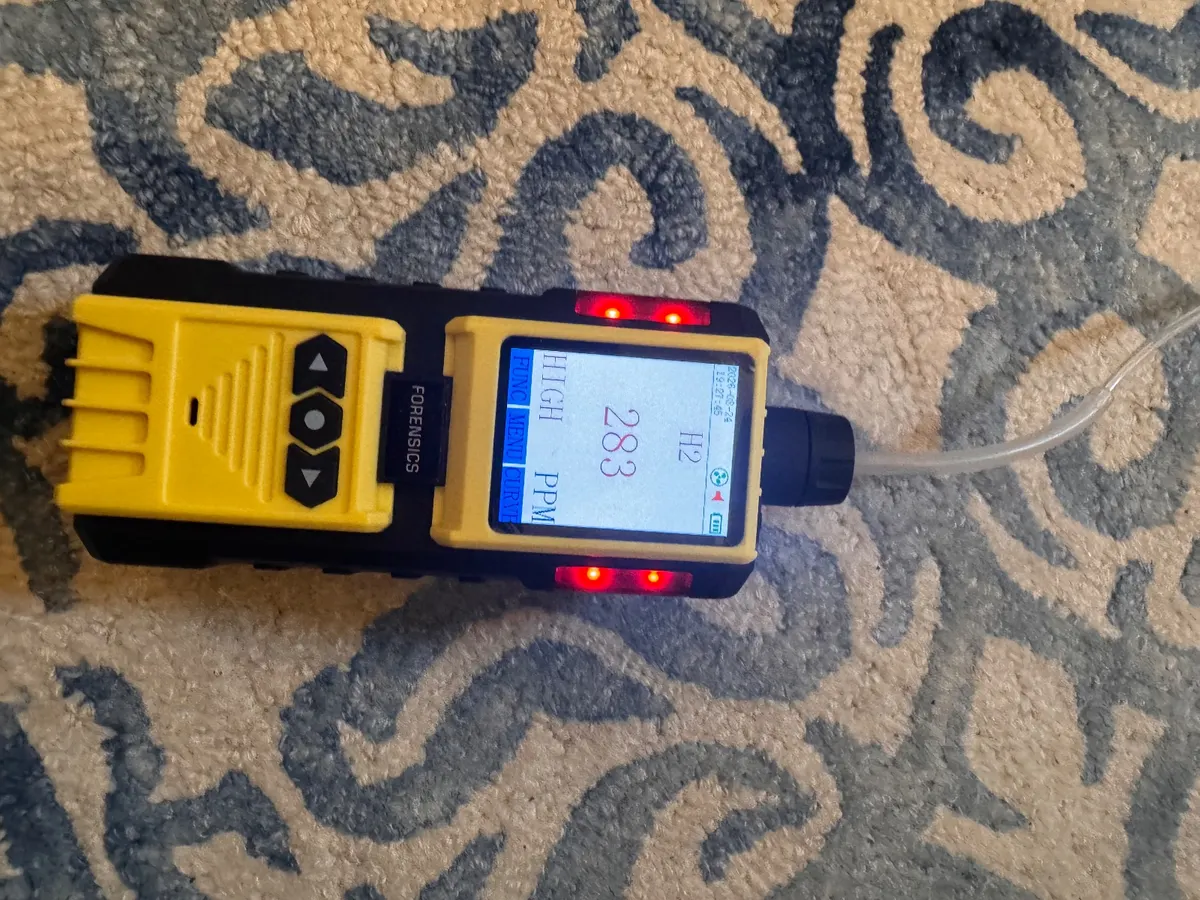
Hydrogen detector reading 296 ppm over the leak position on a living room floor
West London, W4August 2026Tracer gas

7 litres a minute lost under a suspended timber floor

What the customer saw

The water meter showed about 7 litres a minute passing with nothing running, and there was no sign of water anywhere in the house.

How we tested

A small drip at the kitchen tap was found first, but it could not account for the loss, so the concealed pipework was tested with tracer gas.

  1. Visual check of every accessible tap, trap, appliance and pipe: only a minor kitchen tap drip.
  2. Mains drained and refilled with hydrogen tracer gas.
  3. Accessible external areas swept first: no significant gas, so the leak was not outside the house.
  4. Living room swept methodically: a clear, repeatable reading where the living room meets the kitchen doorway.

What we found

The gas reading concentrated at one spot, and the floor there had visibly sunk compared with the boards around it. No comparable reading anywhere else in the property.

What it meant for the repair

Leak placed under the suspended floor at the kitchen doorway, so the repair needed only that section of floor lifting rather than the whole room.

Tracer gas leak detection →
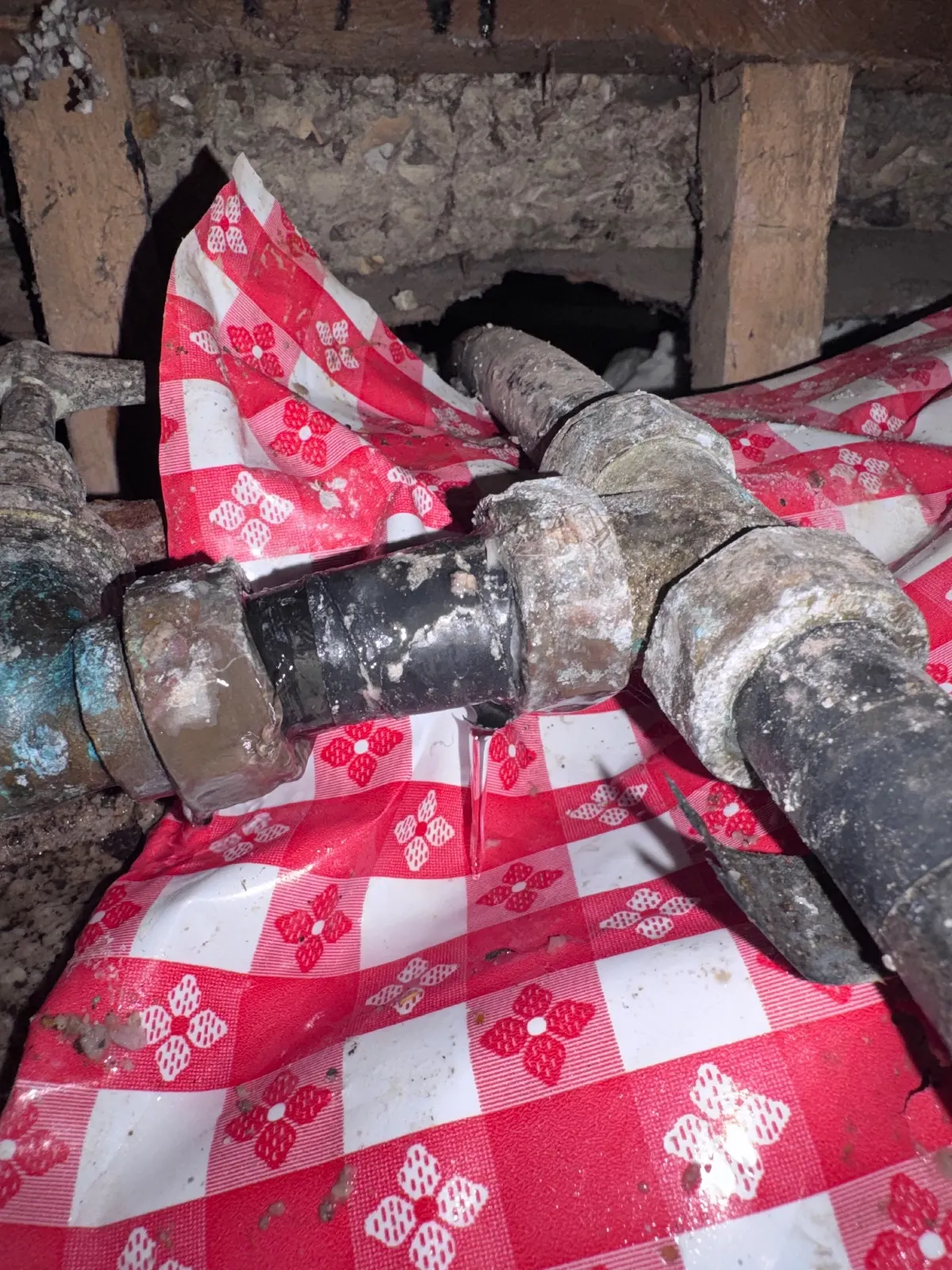
Old imperial-sized plastic supply pipe and stopcock joints exposed under a church hall floor
East LondonAugust 2026Tracer gas and pressure testing

25 litres an hour from old underground pipe in a church hall

What the customer saw

Unexplained water consumption of about 25 litres an hour. A dripping bathroom tap had been noticed but was far too small to explain it.

How we tested

The building's supply was isolated, drained and filled with tracer gas. Gas kept escaping through a loft storage tank, so we fitted an isolation valve to the tank before testing the rest of the system.

  1. Visual inspection of bathrooms, kitchen, taps and the loft tanks.
  2. Incoming main isolated, system drained and filled with tracer gas.
  3. Loft tank isolated with a new valve so the remaining pipework could hold test pressure.
  4. Pressure monitored: a small drop, then a sudden large one, confirming a significant leak on the isolated section.
  5. Pipe route under the main hall surveyed with the gas detector.

What we found

Old imperial-sized plastic supply pipe running underground beneath the main hall, with heavy gas escaping where it joins a stopcock. With the water turned back on, the leak was seen running from that joint.

What it meant for the repair

Cause of the extra consumption confirmed and documented. Because the pipe is an obsolete imperial size, the repair was planned as a daytime job so a sample could be matched to the right replacement fittings.

Water mains leak detection →
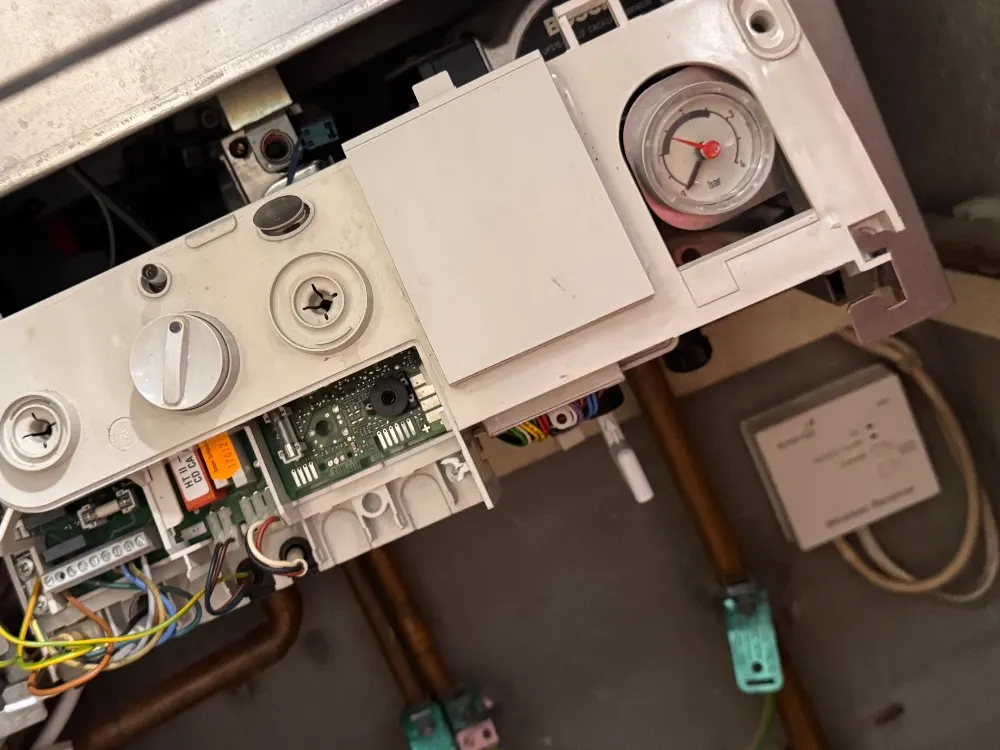
Combi boiler with the front removed showing the pressure gauge and controls
North London, N1August 2026Tracer gas on the heating circuit

Boiler losing pressure straight after every top-up, and no leak

What the customer saw

Every time the tenant topped up the boiler, the pressure fell again almost at once. A hidden leak on the heating pipework was suspected.

How we tested

Radiators, valves and visible pipework were all dry, so the heating circuit was drained and filled with tracer gas to test the pipes that could not be seen.

  1. Visual inspection of every radiator, valve, joint and exposed pipe: no staining, corrosion or damp.
  2. Heating circuit drained and filled with tracer gas.
  3. Whole property surveyed for escaping gas, and the test repeated a second time: no gas on either run.
  4. System purged and refilled: it would not hold pressure, and water discharged heavily through the pressure relief valve.

What we found

No leak anywhere in the heating pipework. The pressure loss was water leaving through the boiler's pressure relief valve, consistent with a failed expansion vessel.

What it meant for the repair

The customer did not need floors lifted or pipes chased out. The job was referred to a Gas Safe registered engineer for the expansion vessel and relief valve, with our report showing the pipework had been tested and was sound.

Central heating leak detection →
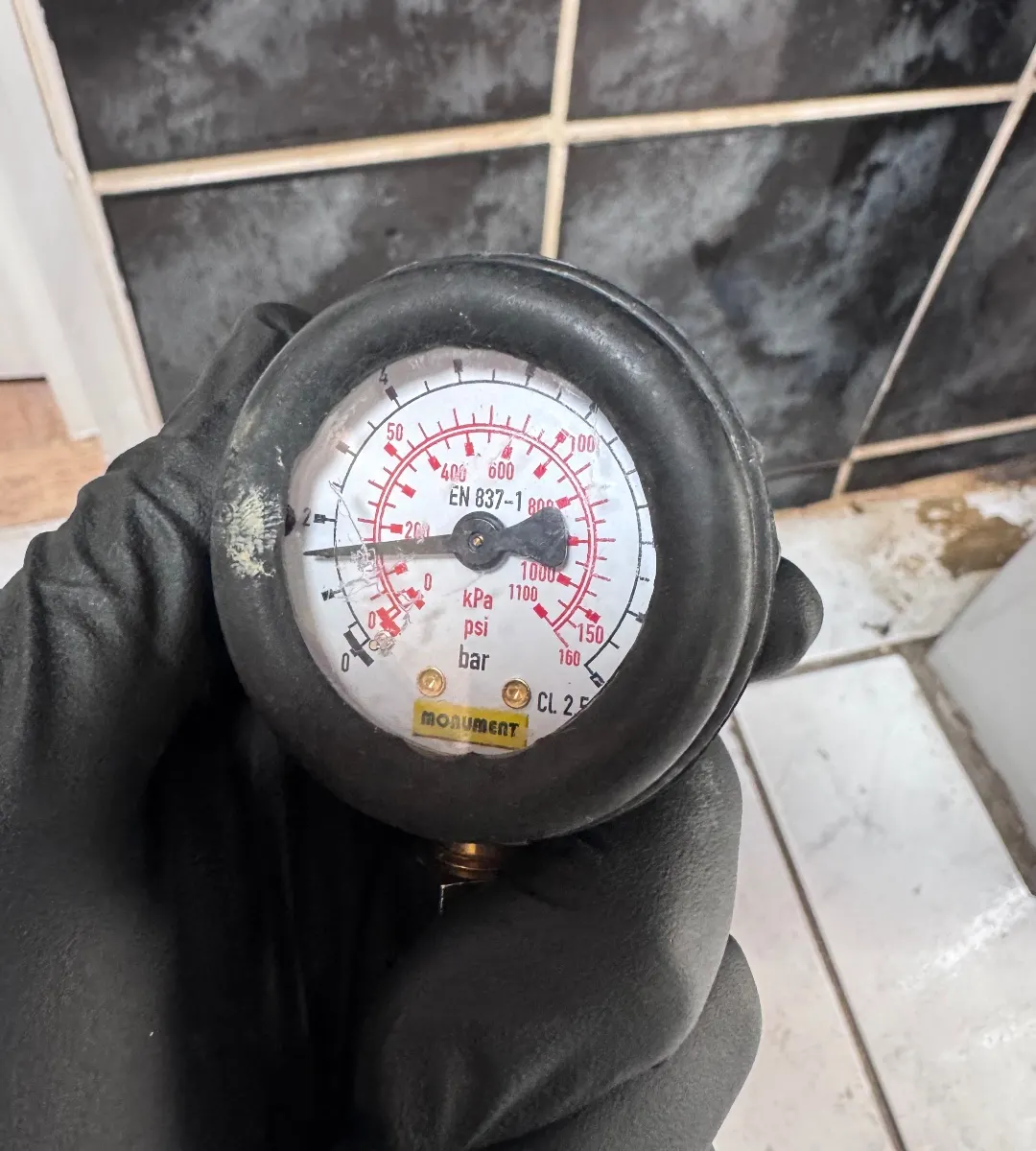
Pressure test gauge held at a bathroom pipe during a leak investigation
West London, UB1September 2026Pressure testing and tracer gas

Eight years of damp, and the pipes were not the cause

What the customer saw

A tenant had lived with damp in the property for about eight years. Several engineers had visited over that time and none had found a leak, and the heating pressure was said to drop now and then.

How we tested

Rather than look for a stain to follow, we tested every water system in the property to establish whether any plumbing was losing water at all.

  1. Visual inspection of all accessible pipework, the bath, shower, toilets, kitchen and basin, heating pipes, valves and joints: no active leak visible.
  2. Hot, cold and heating systems pressure tested separately: no significant pressure loss on any of them.
  3. Tracer gas introduced and the property surveyed: no gas indication of a leak anywhere.
  4. The occasional heating pressure drop the tenant described could not be reproduced; the system stayed stable throughout testing.

What we found

No active leak on the hot water, cold water or heating pipework at the time of the survey. On the evidence of the tests, the damp was not coming from the plumbing.

What it meant for the repair

Instead of another round of opening floors to hunt for a pipe, the owner had a clear, tested answer: the next step was a damp, building or structural specialist to look at rising or penetrating damp, condensation, drainage or the external fabric.

Damp and moisture surveys →

Not every survey ends with a hole in the floor

Two of the jobs above found no leak at all, and that was the useful answer: it saved the owners lifting floors to chase pipes that were sound. A survey is there to establish what is actually happening, and our published prices are the same whichever way the answer goes. Leaks on your own property are covered by no find, no fee.

Free Quote

Get a No-Obligation Leak Detection Quote

Tell us what's happening and we'll come back to you with a clear price for the investigation. No pressure, no hidden fees. Or if it's urgent, just ring us. We pick up 24/7.

Prefer to talk? Call 020 3912 0200
Free
No-obligation quotes
Same-Day
Appointments available
24/7
Emergency response
No Find
No fee guarantee
1Step 1 of 1: Tell us about your leak
What type of issue?
Preferred contact time
Typical response: 15 minutesNo obligation
LEAK DETECTION 24/7
020 3912 0200