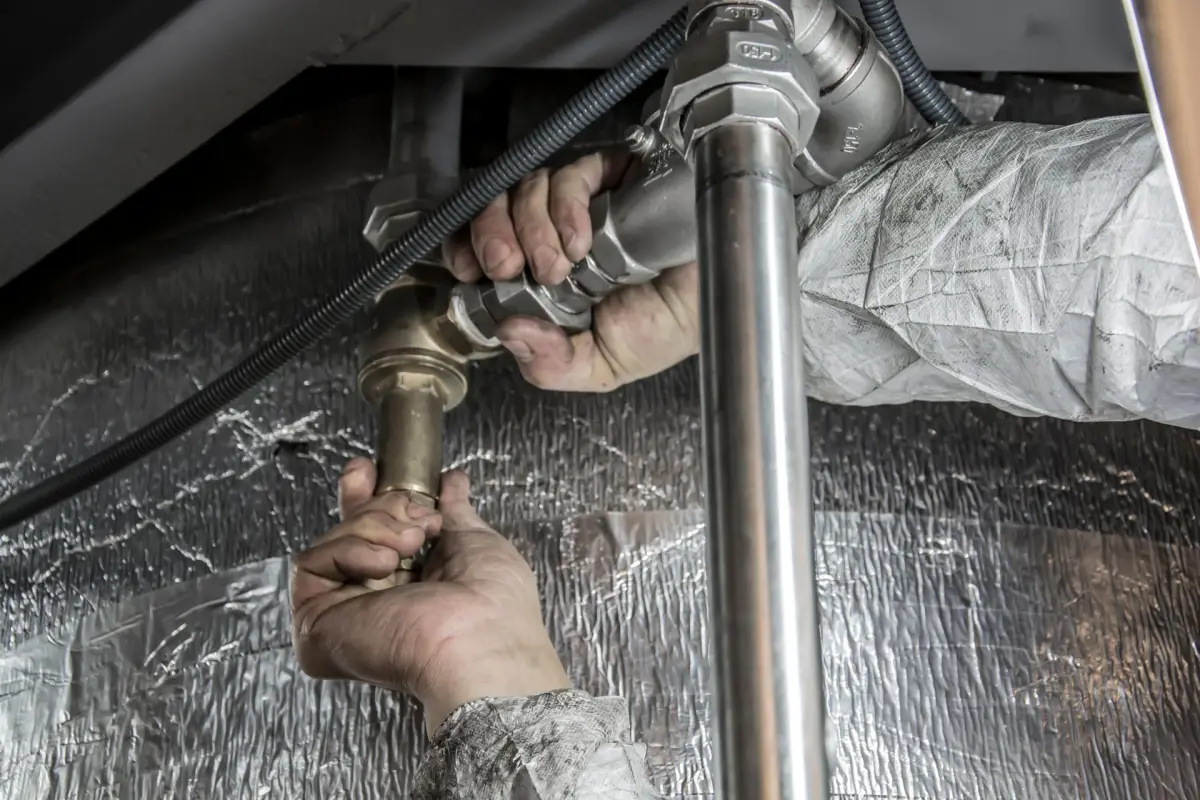
Neither leaks more as a rule. They fail in different places. Copper leaks through the pipe wall: pinholes from pitting corrosion, and corroded sections where bare copper sits in screed or plaster. Plastic pipe almost never leaks along its length. Its weak points are the joints, above all push-fit fittings that were not pushed fully home or were fitted without a pipe insert. So in a copper system, suspect the pipe. In a plastic system, suspect the fittings.
That difference also changes how the leak is found, which most comparisons leave out. Copper carries the sound of a leak a long way. Plastic does not, so plastic leaks are usually traced another way. For lead, galvanised steel and the wider history of pipework in London houses, see our guide to pipe materials and leak risk.
What "Plastic Pipe" Means in a UK Home
When people compare plastic and copper, they usually mean the pipes that carry water under pressure. In UK homes, plastic supply and heating pipe is almost always one of two materials: cross-linked polyethylene (PE-X) or polybutylene. Both are flexible, come on coils, and are joined with push-fit fittings. JG Speedfit and Hep2O are the names you will see printed on them.
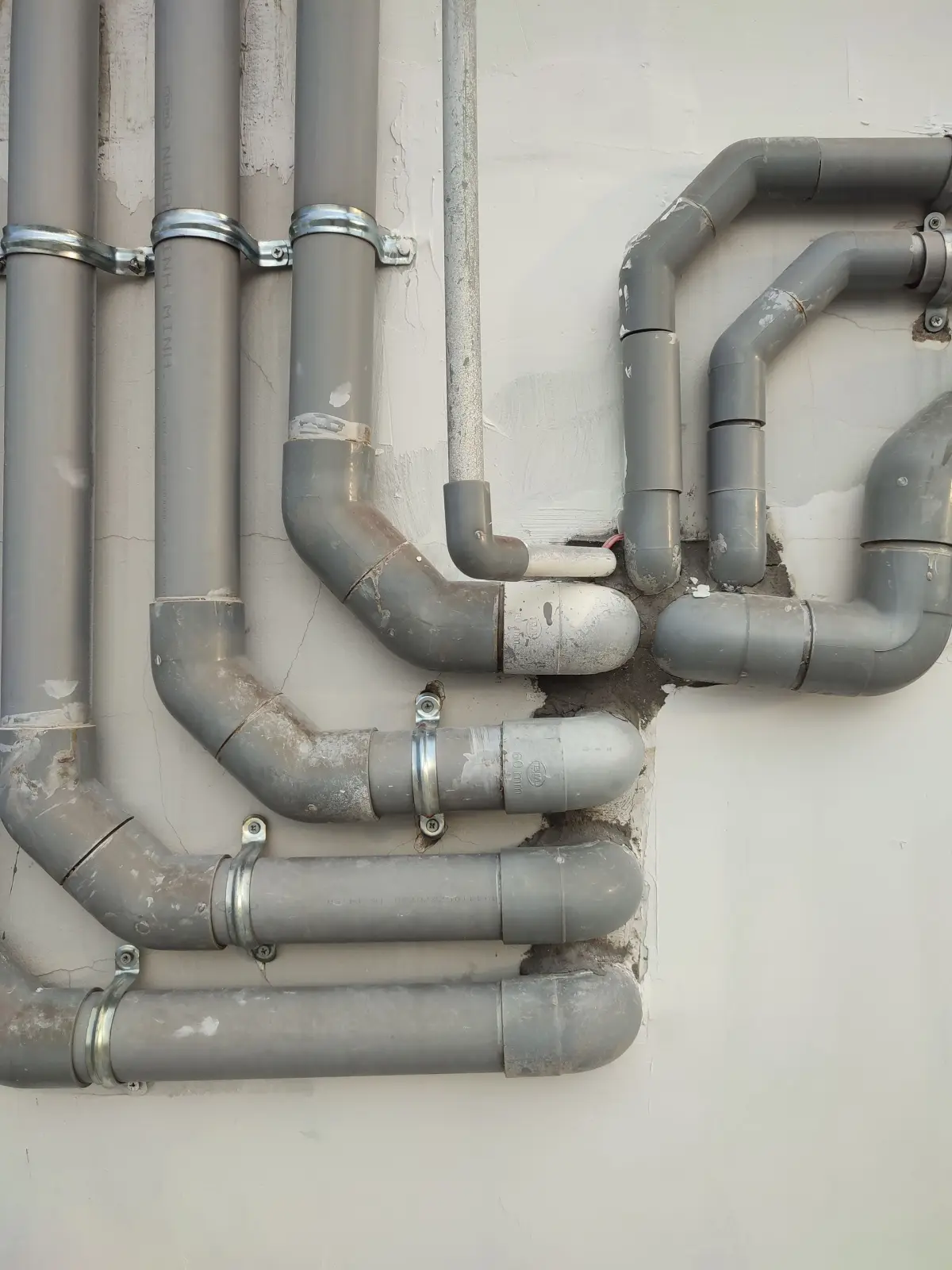
PVC, ABS and polypropylene are a different job. They are used for waste and soil pipes, which are not under pressure. They leak too, but only when water is going down them, and for different reasons. CPVC, common in some other countries, is rarely used in British houses.
So the real comparison is copper pipe with soldered or compression joints against flexible plastic pipe with push-fit joints. Most London homes have both. A refurbished bathroom or a new boiler often means plastic pipe joined onto older copper.
Where Copper Leaks
Pinholes in the pipe wall. Pitting corrosion eats through the wall from the inside and leaves a hole the size of a pin. The leak is slow, often a seep rather than a drip, and it can run for months under a floor before a stain appears. We find them most often on older copper, particularly hot water and heating runs.
Corrosion from outside. Copper laid bare in a cement screed, buried in plaster, or left with flux on its surface after soldering can corrode from the outside. Copper under a solid floor is normally sleeved or wrapped for this reason. Where it was not, the pipe can thin along a stretch rather than at one point.
Joints and fittings. Soldered joints rarely fail if they were made properly. Compression fittings on appliance connections, isolating valves and radiator valves can work loose or weep at the olive.
Frost. Water expands as it freezes. Copper cannot stretch, so a frozen copper pipe in a loft or on an outside wall splits. Plastic pipe flexes more, but the fittings on it can still be forced apart.
Where Plastic Leaks
Pipe not pushed fully home. A push-fit fitting has a grab ring that grips the pipe and an O-ring that seals it. If the pipe stops a few millimetres short, the grab ring can still hold it while the O-ring seals badly or not at all. The fitting may hold for years and then start to weep. Most brands print insertion depth marks on the pipe so an installer can check.
Missing pipe insert. Flexible plastic pipe needs a metal or plastic insert pushed into its end, so it stays round inside the fitting. Without one, the pipe can squash slightly under the grab ring and the seal fails. It is one of the first things we check on a plastic leak.
A poor cut. Pipe cut at an angle, or with a burr left on the end, can nick the O-ring as it goes in.
Fittings under strain. Plastic pipe that is unclipped, pulled sideways into a fitting, or bent too tightly near one puts constant load on the joint. Underfloor runs that were not clipped are a common source.
Screws and nails. A screw through a floorboard into a pipe is a classic leak. Copper suffers too, but plastic pipe cannot be found with a metal detector before fixing, so it gets hit more often.
Heat near the boiler. Boiler makers usually specify copper for the first length of pipe from the boiler. Plastic connected straight onto a boiler can be exposed to more heat than it is meant for.
How Each Kind of Leak Is Found
Copper: listen for it. Water escaping from a pressurised copper pipe makes a hiss, and copper carries that sound along the pipe. Acoustic leak detection with listening sticks and ground microphones can follow it to the loudest point, even through a solid floor.
Plastic: use tracer gas. Plastic pipe soaks up the sound, so a leak can only be heard close to it. On plastic supply pipes and underfloor heating, the usual method is tracer gas. The pipe is drained and filled with a safe mix of hydrogen and nitrogen, which escapes at the leak and rises through the floor, where a detector picks it up.
Either: thermal imaging on hot pipes. On hot water and heating pipes, a leak shows as a warm area under the surface, whatever the pipe is made of. Running hot water through the pipe also lets the engineer see its route.
Tracing the route. A metal pipe can be followed with a locator. Plastic cannot, so its route is traced with heat or tracer gas instead. That matters before anyone lifts a floor: knowing where the pipe runs keeps the opening small.
Comparison Table
| Pipe | Usual leak point | How it shows | Method that usually finds it |
|---|---|---|---|
| Copper | Pinhole in the wall, corroded section in screed, loose compression fitting | Slow damp patch, warm spot on hot runs | Acoustic, thermal imaging |
| Plastic supply or heating (PE-X, polybutylene) | Push-fit fitting: depth, missing insert, damaged O-ring | Seep at a fitting, often under a floor | Tracer gas, thermal imaging on hot runs |
| Plastic waste (PVC, ABS, polypropylene) | Joints, traps, seals | Damp only after water is used | Moisture mapping, visual inspection |
| Copper joined to plastic | The joint between them | Damp around a boiler, cylinder or new bathroom | Thermal imaging, tracer gas |
Lead and Galvanised Steel, Briefly
Older London houses may still have a lead water supply pipe or a run of galvanised steel. Lead is soft and tends to split where it has been bent or disturbed. Galvanised steel rusts from the inside once its zinc coating has gone. Both are worth replacing whether or not they leak. The pipe materials guide linked above covers both in detail.
Which Pipes to Keep an Eye On
If your home has older copper, watch for damp below hot water and heating runs, and for a boiler that needs topping up. If it has plastic, the fittings matter more than the pipe: push-fit joints buried under floors or behind panels with no access are the ones that cause trouble. Before fixing anything into a floor or wall, find out where the pipes run.
If you think a pipe is leaking, a meter test shows how fast. Our hidden leak calculator explains how to do one and what the result means. If your copper pipes have developed pinhole leaks, our repair partners at Emergency Repairs London can replace the affected sections.
People Also Ask
Are plastic pipes better than copper?
For leak risk, neither wins outright. Plastic does not corrode, but its push-fit joints depend on careful fitting. Copper is rigid and well understood, but older pipe can pinhole. A well-fitted plastic system and a well-made copper one are both reliable.
Why do push-fit fittings leak?
Usually because the pipe was not inserted to its full depth, the pipe insert was left out, the pipe end was cut badly, or the fitting has been under strain from an unclipped pipe. These leaks tend to be slow seeps rather than bursts.
Can you find a leak in plastic pipe?
Yes. Because plastic does not carry sound well, the usual method is tracer gas, with thermal imaging on hot water and heating runs. Both can locate the leak through a finished floor.