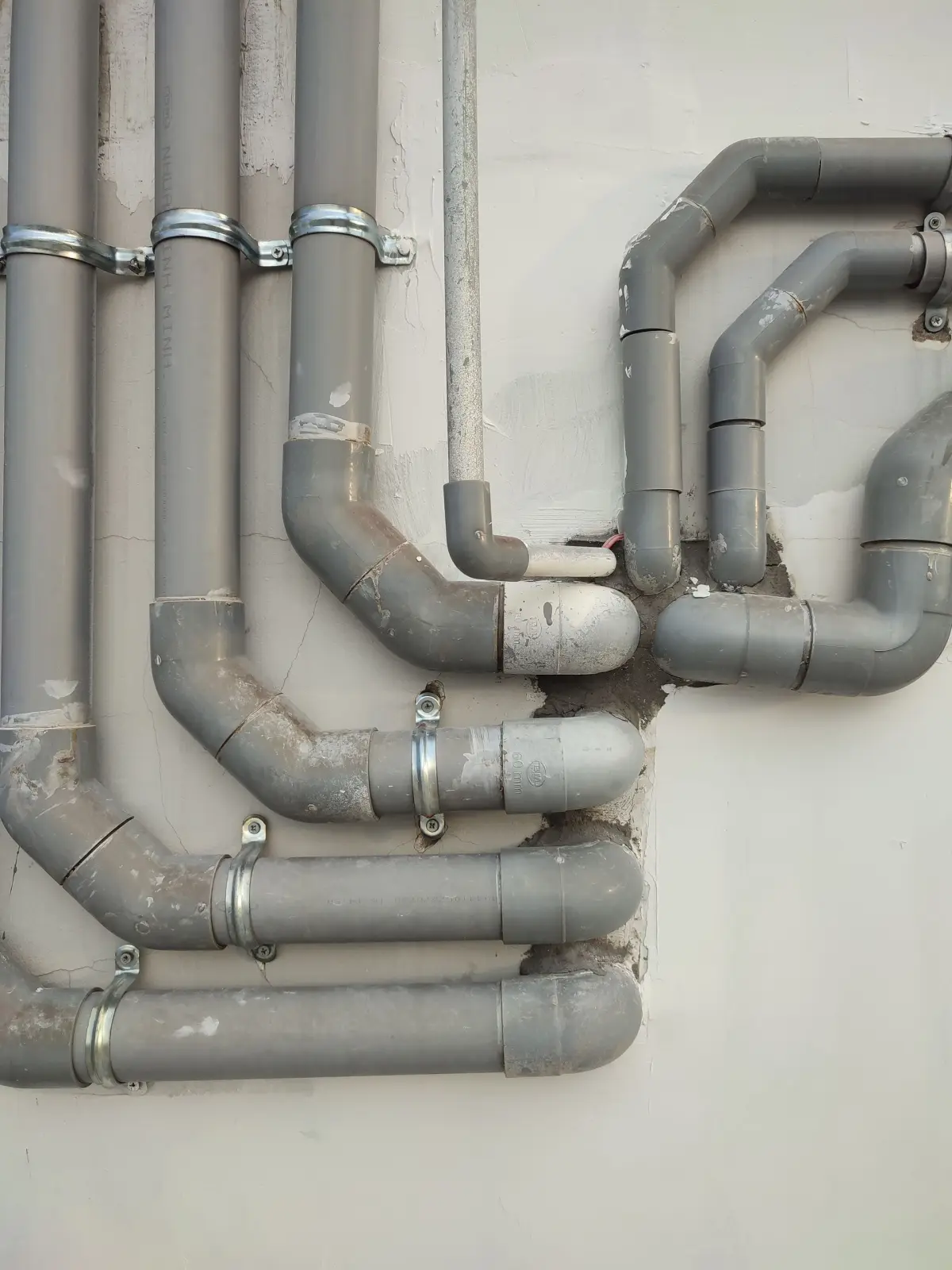
In a block of flats, the pipes that serve every home usually run through a vertical shaft called a riser. It is a practical way to carry water, heating and waste up a building, but it means one leak can affect several homes, and the water often shows up floors away from where it starts. A riser leak is also a shared problem, so the people who need to act are not always the people who notice it.
This guide explains how risers are usually laid out, what to do when water appears in a riser cupboard, how a leak is traced between floors, how access to several flats is organised, and what the report for the freeholder or managing agent should contain.
What is a riser in a block of flats?
A riser is a vertical service route, normally with a cupboard or access door on each floor, often in the communal corridor. Depending on the building, it may carry:
- The cold water rising main, from the incoming supply or a booster pump set up to each floor.
- Branch pipes to each flat, often with a stopvalve and sometimes a water meter for each flat in the cupboard.
- Communal heating and hot water pipes, in blocks with a central plant room or heat network.
- Soil and waste stacks, which carry waste down from every flat.
- Rainwater pipes, in some buildings, from the roof or balconies.
- Electrical and communications cables, which is one reason water in a riser needs care.
Some pipes in the riser are shared by everyone, and some serve only one flat. Which is which matters for the investigation and, later, for the lease. As a rule, only the lease can say who is responsible for a particular pipe, so any question of responsibility should go back to your lease and your managing agent.
What should you do if water is coming from a riser cupboard?
- Keep clear of electrics. Risers often carry cables and meters. If water is near electrical equipment, do not touch it, and tell the managing agent or building management immediately so an electrician can be involved.
- Report it straight away. Contact the managing agent, concierge or out-of-hours line for the building. Risers are usually common parts, so the freeholder or their agent normally controls access and valves.
- Tell your neighbours. Flats above and below may be affected or may be the source.
- Close your own flat's stopvalve if you can reach it. If your flat's valve is inside your home, closing it rules your supply in or out. If it is in the riser, leave it to whoever manages the building unless you have been shown how to use it.
- Photograph and note times. Where the water is, how fast it is coming, and which floors are affected.
Avoid opening panels, cutting into riser walls or lifting floor sections. Riser shafts in many blocks are part of the building's fire protection, with fire-stopping between floors and fire-rated doors, and any opening needs to be made and made good properly by someone competent, with the knowledge of whoever manages fire safety for the building.
How is a riser isolated?
A well-designed riser has valves that let one flat, one floor or one section be shut off without cutting water to the whole block. In practice, the investigation often starts by finding out what is really there.
| Valve | What it isolates | Common problems |
|---|---|---|
| Flat stopvalve in the riser | The branch to one flat | Unlabelled, labelled with the wrong flat number, or seized |
| Floor or section valve | Several flats on one floor or one part of the riser | Not present in older blocks, or hidden behind boxing |
| Riser valve at the base | The whole rising main | Cuts water to every flat on that riser |
| Heating flow and return valves | Communal heating to a flat or a section | Controlled by the heating contractor; may affect heat to many homes |
The Water Supply (Water Fittings) Regulations 1999 require a supply to separate premises to have a stopvalve that can shut it off without shutting off other premises, and a pipe serving several premises to have a stopvalve that each occupier can reach. Older blocks do not always match that, which is part of why riser leaks take time to isolate.
How is a leak traced between floors?
Water in a block follows the structure. It runs down the riser, along slabs and through ceiling voids, so the flat that sees the damage may be several floors below the source. Tracing it is a matter of working methodically up and down the building.
- Map where the water is. Moisture readings and a look inside each riser cupboard, from the lowest affected floor upwards, show where the water first appears.
- Identify the pipes at that level. Supply, heating, waste and rainwater pipes behave differently, and each needs a different test.
- Use the meters. Where each flat has a meter in the riser, reading them with water unused in those flats shows whether any flat's branch is losing water.
- Isolate branches one at a time. Closing each flat's valve in turn, with the managing agent's agreement, shows whether the water stops when one branch is shut.
- Test the waste stack. Waste pipes only leak when used, so running water in the flats above one at a time shows whether a stack joint or branch connection is the source.
- Pinpoint the fault. Thermal imaging for hot pipes, acoustic listening on pressurised pipes and tracer gas where a pipe is buried or boxed in.
A leak inside a flat can also run into the riser from the side, for example from a bathroom next to it. So the search does not stop at the riser door.
How is access to several flats organised?
This is often the slowest part of a riser investigation. The engineer may need to enter flats that are not affected, at a time that suits several residents at once.
- The managing agent usually coordinates. They know the leaseholders and tenants and can give notice. Check your lease for the access provisions that apply to your building.
- Plan the order. Flats directly above the first wet point are the priority, followed by flats beside the riser.
- Agree what will happen in each flat. Usually a short look at bathrooms, kitchens and any boxing next to the riser, with water left unused for a period.
- Arrange keys for absent residents. If some flats are empty or the occupiers are away, the agent may be able to arrange access in line with the lease.
- Warn about isolations. If a riser section has to be shut off, everyone on it needs notice.
If access to a flat cannot be arranged, the investigation can only report on what was available, and the report should say so.
What should the report for the freeholder include?
A riser leak often involves several parties, so the report needs to be clear to people who were not there:
- the flats and common parts inspected, and who gave access;
- any flats or areas that could not be inspected;
- the valves operated and what each isolated;
- meter readings and any pressure test results, with times;
- the location of the leak, with photographs and a sketch of the riser;
- which pipe it is on, such as the rising main, a flat branch, a heating pipe or the waste stack, and where along it;
- the likely cause, where it can be established;
- the extent of damp in each affected flat.
The report describes where the water comes from. It does not decide who pays. Our guide to what a leak detection report should contain covers the general standard, and our article on commercial leak repairs explains how multi-occupier jobs usually run.
Can riser leaks be prevented?
Some can be spotted earlier. Managing agents can:
- label every valve with the flat or section it controls, and check the labels are right;
- exercise valves periodically so they work when needed;
- include riser cupboards in routine inspections, looking for corrosion, weeping joints and damp;
- keep a record of past leaks and repairs by floor.
Some blocks also fit water sensors in risers or flow monitoring on the supply. Our guide to leak detection systems for buildings explains what these can and cannot do.
When should you call a leak detection specialist?
- water is appearing in a riser or a flat and nobody can tell which floor it comes from;
- isolating the obvious valves has not stopped it;
- the leak may be on the waste stack or a boxed-in section;
- the freeholder, managing agent or insurers need an independent written account.
Our commercial and block leak detection is priced from £300, depending on the building and the number of flats involved. Emergency attendance is from £300 in working hours and £450 out of hours. Call 020 3912 0200 to discuss access.
Frequently asked questions
Who do I call about a leak in the riser cupboard?
Usually the managing agent or the building's out-of-hours contact, because risers are normally common parts. Tell your neighbours too, as the source may be in another flat.
Who is responsible for a leak in a communal pipe?
It depends on your lease and on exactly which pipe is leaking. Check your lease and speak to your managing agent. A clear report on the leak location helps them apply it.
Why is water coming through my ceiling when the flat above is dry?
Water can travel down the riser or along the slab from a flat higher up or to the side, or come from a communal pipe. Tracing it floor by floor finds the source.
Can a riser be isolated without cutting off the whole block?
Often, if the riser has valves for each flat or section. Older blocks may have fewer valves, which can mean a wider shutdown while the leak is found and repaired.
Do I have to let the engineer into my flat?
Leases often contain access provisions for inspections and repairs. Check your lease and discuss the arrangements with your managing agent.